All Lamborghini Cars From Birth to Now

According to legend, the birth of Lamborghini has taken place after a fight between Enzo Ferrari and Ferruccio Lamborghini. The latter complained to the Drake’s not lofty quality of the GT cars from Maranello. The debate between the two occurred in the early 60s Ferrari and Lamborghini dismissed, telling him to “think about the tractors that I take care of self.”
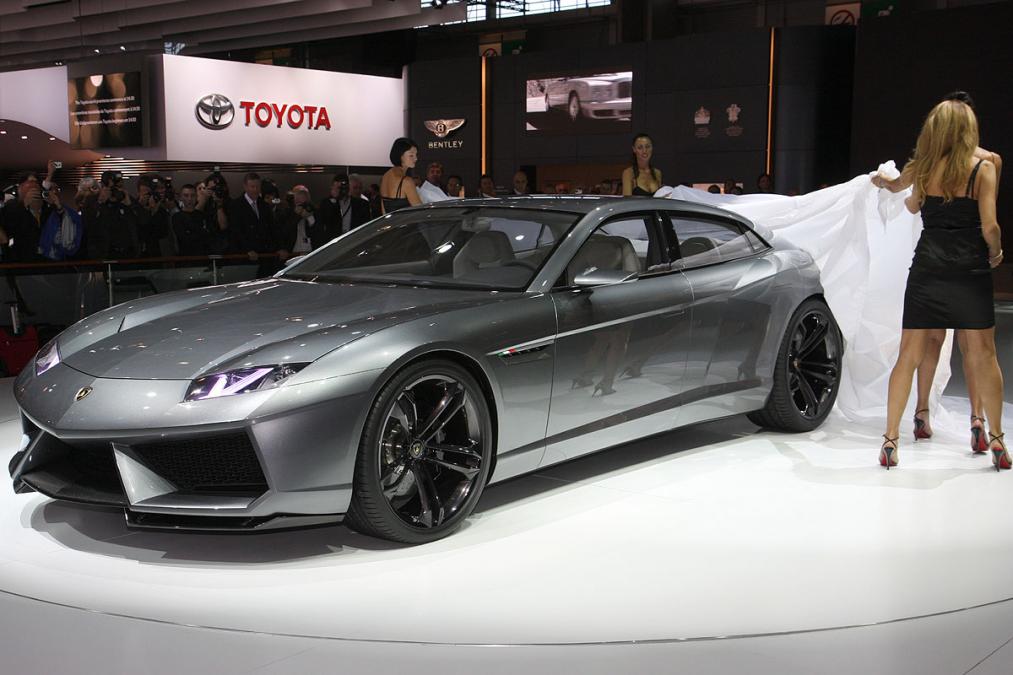
See pride, Ferruccio Lamborghini decided to give his life to a car manufacturer. Thus, in 1963, left the development of the first Lamborghini vehicle. The seat of Cento (FE) – where the Lamborghini tractors were produced – working team composed by the designer Giampaolo Dallara Giotto Bizzarrini the engineer and designer Franco Scaglione.

350 GTV 
The “trio” gave birth to the Lamborghini 350 GTV prototype supercar exhibited at the Turin Motor Show of that year and featuring the 3500 V12 engine which provided a top speed of 280 km / h. Also in ’63, started the work of the plant in Sant’Agata Bolognese.

350 GT 
At the Geneva Motor Show in 1964, was presented the Lamborghini 350 GT production version of the 350 GTV. The car was designed by Carrozzeria Touring and was moved by 3500 V12 engine with 270 horsepower pushing the car up to 250 km / h top speed. In addition, the Lamborghini supercar had the cockpit configured in the unusual pattern 2 +1. Debuted in the ’65 Lamborghini 350 GTS Zagato and 3500, while at the Turin Show was presented the prototype P400 rear engine. This was the new unit 3900 V12 350 hp and 430 hp in standard version S.

The Miura 
The prototype P400 prefigured the first vs Ferrari model of Lamborghini. The Miura, officially presented at the 1966 Geneva Motor Show. Besides being the symbol of Lamborghini, the Miura was the first model to bear the name of a herd of bulls. In fact, bull officially became the brand identity of Lamborghini, zodiacal sign as owner of Ferruccio. The car was designed by Marcello Gandini, at that time head of Centro Stile Bertone. The Miura was equipped with a 4000 V12 engine from 350 horsepower that can reach a top speed of 270 km / h.

400 GT 
In ’66 was also presented the Lamborghini 400 GT, a GT 2 +2 always moved from the 4000 V12 engine but with reduced power to 320 hp. In addition, two prototypes were presented as the 400 Monza and the Flying Star.

Two years later, based on the 400 GT was born his deputy, or the Lamborghini Islero, also driven by the 4000 V12 engine with 320 horsepower. In 1968 he was also presented the Miura Roadster, remained at the prototype stage.

In ’69, however, the range was enlarged from 370 hp to the Miura S and the Espada. The latter adopted the 4000 V12 320 hp engine and was the standard version of the prototype Marzal, designed by Bertone and presented two years earlier.

Jarama 
In 1970, at the Geneva Motor Show Lamborghini Jarama was introduced that replaced the Islero, with whom he shared the 4000 V12 engine with 320 hp. In ’71 debuted the Miura SV, the latest evolution of 385 hp. Instead, at the Geneva Motor Show the same year he was presented the prototype LP500 engine mounted longitudinally rear.

In 1972 the range was expanded again with the Lamborghini Urraco, 4-seater sedan designed by Bertone, moved by the 2.5 V8 engine 220 hp. In ’73 he left the scene the Lamborghini Miura, Countach superseded by version serial protoripo LP500.

In 1974, with the presentation of the prototype Bravo. In addition, other versions of the Lamborghini debuted Urraco: the P300 and P200 from 265 hp from 182 hp, it is intended solely for the Italian market.

The crisis 
The Lamborghini crisis was caused by the development of a luxury SUV and alliance with BMW to design the M1. Shortly after the presentation of the prototype in 1980 Athon, Lamborghini went to meet with failure. The company revived the next year thanks to the French group that presented the Jalpa Mimran supercars like the new course.

Countach 
Then came the Lamborghini Countach Quattrovalvole in 1985 and the following year, the LM-002 SUV. But in order to survive, Lamborghini needed a strong international partner. Thus, in 1987, the House of Sant’Agata Bolognese was taken over by Chrysler Corporation, headed by Lee Iacocca.
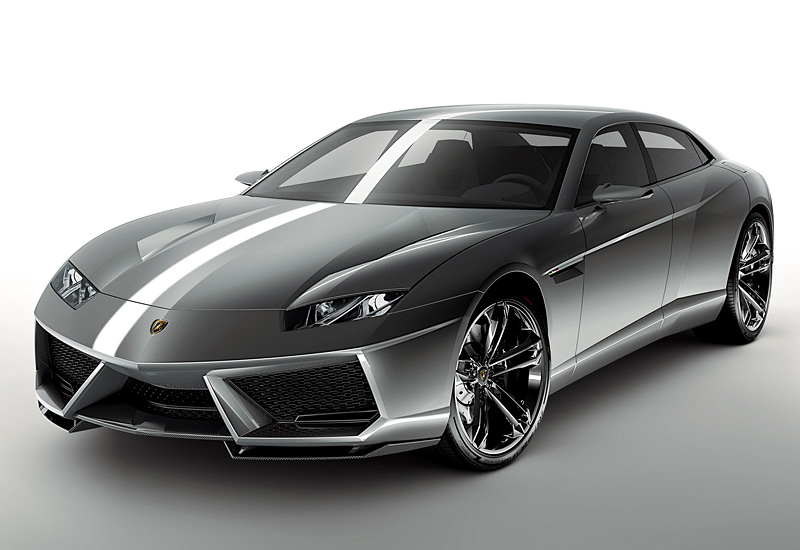
estoque lamborghini price

  1. estoque lamborghini price S.p.A. is an Italian automobile company that makes luxury, high end sports cars. Its has it headquarters in Sant’Agata Bolognese, near the city of Bologna, Italy. Lamborghini was founded by an Italian engineer Feruccio in 1963.

2008 Lamborghini Estoque Concept top car rating and specifications

2. Automobili Lamborghini S.p.A. emerged as a result of competition between Feruccio Lamborghini and Enzo Ferrari (of Ferrari cars ) who at that time already had been known as a famous manufacturer of sports cars. Feruccio Lamborghini himself was an accomplished engineer; he was an owner and manager of a successful company, which produced agricultural machinery. Feruccio loved sports cars and owned a Ferrari 250 GT. A rumour has it, that two great constructors had a conflict after Lamborghini had turned personally to Enzo Ferrari because of the broken clutch on his Ferrari 250 GT. It is believed that quick-tempered Enzo recommended Feruccio to deal exclusively with tractors, and never even touch a sports car. Feruccio Lamborghini took it as a challenge resolving to use his assets, experience, and passion to found a company, capable of going toe-to-toe with Ferrari.

3. This may come up as a surprise to some of you, but Lamborghini never participated in any major motorsports competitions. According to the will of Feruccio Lamborghini, his company stayed away from racing, because the famous Italian engineer always believed the motorsports to be a big waste of time and resources.

4. One thing Lamborgini was always known for is its top-notch design. Some of the best professionals in the industry, including Franco Scaglione, Touring, Zagato, Mario Marazzi, Bertone, ItalDesign and Marcello Gandini, worked on its visual design.

5. People usually think of luxury and high-performance grand tourers, whenever someone mentions the name Lamborghini. Nevertheless, the Italian automaker has created few unusual models. Feruccio Lamborghini had an extensive experience in producing tractors, so it seemed natural for him to try his hand at designing an automobile with high off-road capabilities. Lamborghini LM002 was the first SUV, built by Italian vehicle manufacturer. Combining speed and luxuriousness with exceptional off-road capabilities, Lamborghini LM002 was in many respects far ahead of its time. When it comes to comfort and ability to cross the difficult terrain, only Land Rover could compete with LM002. Unfortunately, automobile market was not quite ready for the new luxury SUV. Therefore, despite the orders from armed forces of Saudi Arabia and Libya, Lamborghini sold only 301 vehicles.

6. The Italian automaker launched its first production model in 1963. With the top speed of 280 km / h, Lamborghini 350GTV was a leader among production cars of its time.

7. The Italian company uses very distinctive naming convention for its car models. Feruccio Lamborghini was quite a fan of Spanish bullfight. In 1963, he visited the cattle-bred farm Miura in Seville. It was owned by Don Eduardo Miura Fernandez, one of the most famous breeders of fighting bulls in Spain. This visit had a strong influence on the Italian industrialist. In fact, he was so impressed by the traditional art of bullfighting, that he made a decision to name all his new sports cars after famous fighting bulls. Traditionally in Spanish bullfight, bulls that manage to defeat a matador are given life, and their names are forever inscribed in the history of the sport. Ferruccio Lamborghini was convinced, that a name of a fighting bull will emphasize the untamed nature of sports cars created under Lamborghini marque. By the way, Ferruccio Lamborghini himself was also a bull in a sense, since his zodiac sign was Taurus. (He was born on April 28, 1916).

8. The first model to be introduced to the world under the “bullish” name was Lamborghini Miura. The sports car debuted at the Geneva Motor Show in 1966. The public warmly received it; however, spectators were somewhat confused, since they were not allowed to open the hood. This was not a coincidence: there was simply no engine under it! Since the engine was still being designed, the prototype was sent to the Geneva Motor Show with a ballast instead of an engine under the hood. Eventually, Miura proved to be a very good car.

9. Lamborghini Countach was produced by the Italian company for 16 years (from 1974 to 1990). Notably, this sports car is one of the a few Lamborghini models, with a name that has nothing to do with bulls and bullfighting. The word “countach” comes from the Piedmontese language, spoken in a region of Piedmont in North-West of Italy. It is an expression of excitement or astonishment and can be translated as “Heavens!” According to the legend, Nuccio Bertone himself made such an exclamation when he saw the first sketches of the future supercar.

10. The story of Lamborghini was not always a story of success. In 1987, the American automobile giant Chrysler, practically saved it from oblivion by acquiring it. The same year, the Italian vehicle manufacturer presented a peculiar concept car under the name of Portofino. It was a sedan with four doors of the guillotine type, powered by a 3.5-liter engine installed at the rear. Although it remained only a prototype, its image and design was subsequently embodied in many Chrysler cars.

Design a site like this with WordPress.com
Get started